
- Hospital Solutions
Empower your team with:

Hospital improved rapid flow capacity from 45 to 60 patients/day.

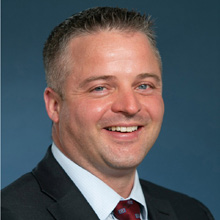
Prior to KATE, we had a bigger problem with over-triaging than under-triaging. Now that we are correctly triaging these patients, we have increased the number of patients we are able to see through our Rapid Flow Area.
Ken Shanahan
Senior Director of Emergency Medicine, UMass Memorial Health
Seeking to improve throughput at their Level 1 trauma center, UMass Memorial Health aimed to drive higher patient volumes through their Rapid Flow Area to support broader efficiency initiatives. However, the unit remained plateaued at 40 to 45 patients per day. The primary obstacle was a persistent bottleneck in identification; subjective triage led to over-triaging, inadvertently routing eligible low-acuity cases to main ED beds rather than the fast-track area. This misalignment stalled the facility’s ability to fully realize the throughput potential of their operational investments.
To accelerate their throughput and capacity initiative, hospital leadership implemented KATE AI to improve acuity assignments objectively at the point of entry. KATE identifies low-acuity patients suitable for fast-track pathways who might otherwise be routed to the main ED. This capability allowed the ED to unlock hidden capacity by accurately shifting volume to the Rapid Flow Area, ensuring that available resources were utilized to their maximum potential without additional headcount or workflow disruption.
Significant improvements across throughput, capacity, and operational efficiency.
After implementing KATE Triage in February 2023, the medical center successfully increased daily Rapid Flow volume from 40–45 to 55–60 patients per day, achieving a 33% increase in throughput capacity.
Operationally, this shift demonstrates how KATE acted as an accelerant to existing initiatives, ensuring the hospital could make good use of its existing space by correctly triaging patients previously routed to the main ED.
Prior to KATE, we had a bigger problem with over-triaging than under-triaging. Now that we are correctly triaging these patients, we have increased the number of patients we are able to see through our Rapid Flow Area.
Ken Shanahan
Senior Director of Emergency Medicine, UMass Memorial Health
This helps us provide more relevant information


