
- Hospital Solutions
Empower your team with:
Hospital achieved higher ED throughput for lower acuity patients with KATE AI.

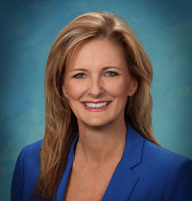
Despite my ER expansion, I knew that I would never build an ER big enough to handle our patient flow, and I realized the solution to my problem was not building a bigger department. KATE helped us reduce the LOS in the ED by 20 minutes per patient on our fast track, so we were able to increase volumes without having to rebuild the ED again.
Mara Bryant
COO / Operations Executive, Adventist Health White Memorial
Adventist Health White Memorial (AHWM) faced critical ED flow challenges despite their recent physical ED expansion. The core impediment was triage precision, where patients requiring higher-acuity care were under-triaged and routed to the fast track. This misalignment consumed valuable clinical time and slowed bed turnover, creating an operational ceiling that physical renovations could no longer address. To maximize current resources, AHWM needed a strategy to get triage right the first time.
AHWM partnered with Mednition to unlock hidden capacity by ensuring accurate patient routing at the point of entry through the ED. KATE AI helped AHWM identify high-risk patients and anomalies during triage, acting as an clinical check against under-triage without requiring additional headcount. By detecting these acuity mismatches instantly, the hospital effectively rerouted patients to the correct care pathways, allowing the department to accelerate care initiation and prioritize resources where they were needed most.
Significant improvements across ED throughput, efficiency, and cost avoidance.
AHWM achieved an average 20-minute reduction in ED Length of Stay per patient, directly translating to faster bed turnover and increased daily throughput.
Operationally, this efficiency gain allowed the hospital to accommodate rising patient volumes and avoid the capital expenditure of rebuilding the ED again.
Despite my ER expansion, I knew that I would never build an ER big enough to handle our patient flow, and I realized the solution to my problem was not building a bigger department.
Mara Bryant
COO / Operations Executive, Adventist Health White Memorial
This helps us provide more relevant information


